
Oracle Analytics Cloud Consultants: From OBIEE Migration to Augmented Intelligence
Oracle Analytics Cloud is replacing OBIEE as the enterprise analytics standard. Learn why OAC consultants with RPD development and augmented analytics skills command premium rates, plus salary data and hiring strategies.
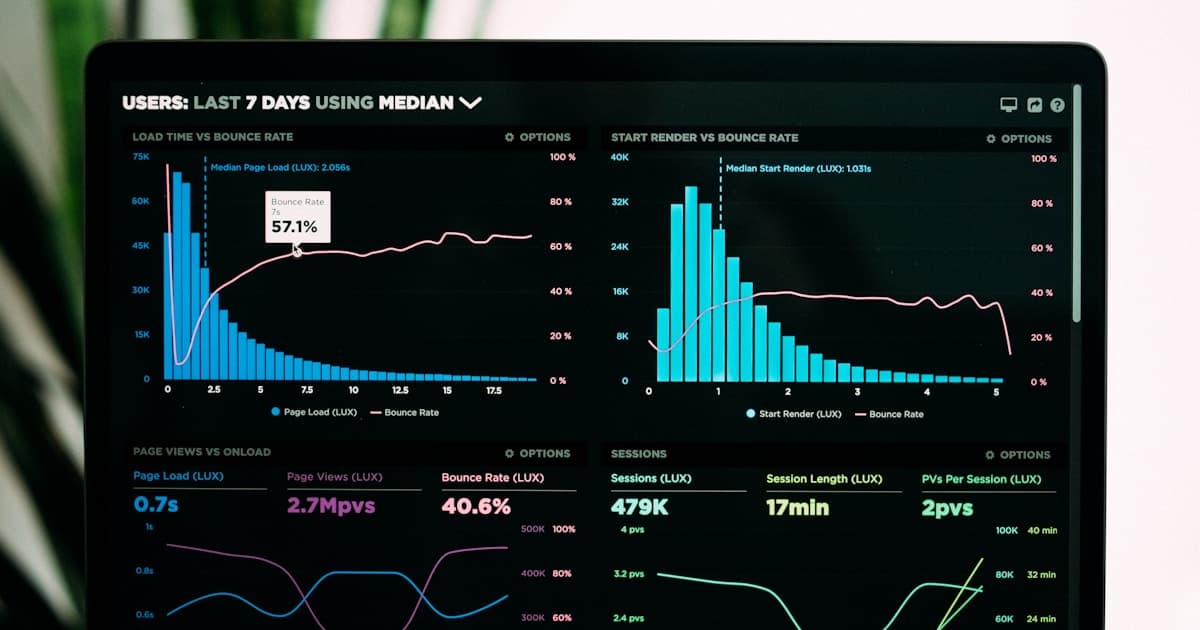
Oracle Analytics Cloud has emerged as the strategic analytics platform for enterprises invested in Oracle's cloud ecosystem. As the cloud successor to Oracle Business Intelligence Enterprise Edition -- the on-premises analytics workhorse that has powered executive dashboards, operational reports, and financial analyses at thousands of organizations for over two decades -- OAC represents a fundamental shift in how enterprises consume, analyze, and act on data. Oracle's accelerating deprecation of OBIEE on-premises, combined with the platform's native integration advantages with Oracle ERP Cloud, HCM Cloud, SCM Cloud, and EPM Cloud, has created a migration imperative that is driving sustained demand for Oracle Analytics Cloud consultants. The talent challenge is compounded by the dual-skill requirement: the most valuable OAC consultants must understand both the legacy OBIEE world of RPD semantic models, LSQL, and enterprise reporting and the modern OAC world of self-service visualization, augmented analytics, and machine learning-powered insights.
Oracle Analytics Cloud Architecture and Capabilities
Oracle Analytics Cloud is not a single tool but a layered analytics platform that combines four distinct capability tiers into a unified cloud service. Understanding this architecture is essential for consultants designing OAC implementations and for organizations evaluating consultant expertise. The platform runs on Oracle Cloud Infrastructure and is tightly integrated with Oracle Autonomous Data Warehouse, Oracle Fusion Applications, and Oracle's broader data management ecosystem. This architectural integration is OAC's primary competitive differentiator -- it enables analytics capabilities that are either impossible or prohibitively complex to achieve with third-party BI tools layered on top of Oracle data sources.
Data Visualization (DV)
The Data Visualization layer provides self-service analytics capabilities comparable to Tableau and Power BI. Business users can connect to data sources, create interactive visualizations using drag-and-drop, build multi-page canvases (workbooks), and share insights through dashboards and stories. DV supports over 50 visualization types, custom map layers, calculated fields, and advanced formatting. The critical differentiator from standalone BI tools is DV's ability to query both direct data connections and the RPD semantic layer simultaneously, giving business users self-service flexibility while maintaining the governed data definitions that the semantic layer enforces. Consultants configuring DV must balance user empowerment with data governance -- defining which datasets are available for self-service exploration versus which require semantic layer access to ensure consistent metric definitions.
Enterprise Analytics (EA)
Enterprise Analytics retains the full power of OBIEE's governed reporting environment, including the RPD (Repository Development) semantic layer, enterprise dashboards, prompts, agents (scheduled reports), and action links. This layer ensures backward compatibility for organizations migrating from OBIEE: existing RPD models, analyses, and dashboards can be lifted into OAC Enterprise Analytics with minimal modification. The RPD remains the heart of enterprise analytics -- a three-layer semantic model (physical, business model and mapping, presentation) that abstracts complex database schemas into business-friendly subject areas. RPD development is a specialized skill that requires understanding of star schema modeling, aggregate navigation, fragmentation, initialization blocks for security, and logical SQL generation. Consultants with deep RPD expertise remain in high demand because the semantic layer is what transforms raw Oracle data into trustworthy, governed business metrics.
Natural Language Processing and Augmented Analytics
OAC's augmented analytics capabilities represent Oracle's push into AI-driven business intelligence. Natural Language Query allows business users to ask questions in plain English -- such as 'show me revenue by region for the last three quarters' -- and receive instant visualizations without needing to understand data structures or build queries manually. The natural language engine parses user intent, maps it to the semantic model or dataset columns, generates the appropriate query, and renders the result as an auto-selected visualization type. Explain is OAC's automated insight engine that analyzes any data point and surfaces statistically significant drivers, anomalies, and correlations. When a user selects a metric and clicks Explain, OAC runs machine learning algorithms that identify the attributes most strongly correlated with that metric's value, surfaces time-series anomalies, and presents segments where the metric behaves differently from the overall trend. These augmented analytics features require careful configuration by consultants -- the quality of natural language results depends directly on the quality of the semantic model's naming conventions, hierarchies, and dimension definitions.
Machine Learning Insights and Data Flows
OAC includes a built-in machine learning layer that enables analysts to train, evaluate, and deploy predictive models without writing code. Supported algorithms include classification (naive Bayes, decision tree, random forest), regression (linear, elastic net), clustering (k-means, DBSCAN), and time-series forecasting (exponential smoothing, ARIMA). Data Flows provide a visual ETL pipeline builder for data preparation, transformation, and model training. Consultants design Data Flows that extract data from Oracle databases, REST APIs, or flat files, apply transformations (joins, filters, aggregations, custom calculations), train ML models on prepared datasets, and write results back to OAC datasets or Oracle Autonomous Data Warehouse. The Data Flow capability positions OAC as more than a reporting tool -- it enables operationalized analytics where ML predictions feed directly into dashboards and operational processes. Financial services clients use OAC ML models for credit risk scoring, retail clients for demand forecasting, and manufacturing clients for quality prediction.
The OBIEE to OAC Migration Path
The migration from OBIEE on-premises to Oracle Analytics Cloud is the single largest driver of OAC consultant demand. Oracle has made clear that OBIEE's future investment is in the cloud: new features, AI capabilities, and performance enhancements are being delivered exclusively in OAC. On-premises OBIEE continues to receive maintenance patches but no meaningful feature development. Organizations still running OBIEE 11g face additional urgency because Oracle has ended Premier Support for that version, leaving only Sustaining Support (no new patches, no bug fixes). For OBIEE 12c customers, the writing is on the wall as Oracle's messaging increasingly positions OAC as the only path forward.
The migration involves several workstreams that consultants must manage concurrently. RPD migration is the most technically complex: the OBIEE RPD (an XML-based repository file) must be uploaded to OAC, but this is rarely a clean lift-and-shift. Connection pools must be reconfigured for cloud data sources, initialization blocks must be updated for OAC's identity management, and any proprietary database features (stored procedures, database-specific SQL overrides) must be validated against the target cloud database. Dashboard and analysis migration follows RPD migration, using Oracle's migration utilities to transfer OBIEE catalog content (dashboards, analyses, prompts, agents) to OAC. Custom JavaScript, Action Framework integrations, and embedded BI content require manual remediation. BI Publisher report migration is a parallel workstream -- BI Publisher data models and report layouts must be tested against OAC's BI Publisher cloud instance, with particular attention to bursting configurations, scheduled report distribution, and integration with Oracle ERP Cloud output management.
Data source migration is often the most underestimated workstream. OBIEE implementations frequently connect to Oracle Database on-premises instances with complex ETL pipelines feeding data warehouses. Moving to OAC typically requires migrating the data warehouse to Oracle Autonomous Data Warehouse or establishing secure connectivity between OAC and on-premises databases using Oracle's Remote Data Connector or private access channels. Consultants must evaluate whether to migrate the data warehouse to the cloud (higher upfront effort, lower ongoing maintenance) or maintain hybrid connectivity (faster migration, higher operational complexity). Organizations with more than 100 OBIEE dashboards, multiple RPD subject areas, and complex BI Publisher configurations should budget 9-12 months for migration and allocate at least two to three experienced OAC consultants to the effort.
RPD Semantic Model Development
The Oracle BI Repository (RPD) is the intellectual foundation of any Oracle Analytics implementation. It is a three-layer semantic model that maps physical database tables to business-friendly dimensions and metrics. The physical layer defines connections to data sources and imports table/column metadata. The business model and mapping layer is where the analytical modeling occurs: dimension hierarchies, logical fact tables, aggregate tables, fragmented sources, and calculation logic are all defined here. The presentation layer organizes the business model into subject areas that end users interact with when building analyses and dashboards. RPD development requires a rare combination of data modeling expertise, SQL proficiency, and business domain knowledge.
Top RPD developers differentiate themselves through their ability to design semantic models that are both performant and maintainable. Performance optimization involves aggregate navigation (configuring the RPD to automatically route queries to pre-aggregated tables when the grain of the analysis allows), query logging and tuning (analyzing the LSQL-to-physical-SQL translation to eliminate unnecessary joins), and cache management (configuring query caching strategies that balance freshness with response time). Maintainability requires disciplined naming conventions, well-documented business rules, modular subject area design, and version control practices. In OAC, RPD changes can be made through either the legacy Administration Tool (a Windows desktop application) or the newer Model Administration Tool within the OAC browser interface. Consultants must be proficient in both, as the browser-based tool is still maturing and does not yet support all advanced RPD features.
Oracle Transactional Business Intelligence (OTBI)
OTBI is Oracle's pre-built analytics layer that sits on top of Oracle Fusion Applications (ERP, HCM, SCM, CX Cloud). Unlike traditional BI implementations that require ETL into a data warehouse, OTBI queries Oracle Fusion's transactional database directly through a pre-built semantic model containing thousands of pre-defined subject areas, dimensions, metrics, and hierarchies. This enables real-time operational reporting without the latency of extract-transform-load processes. OTBI is delivered as part of Oracle Fusion Applications -- it is not a separate product purchase -- and is accessible through OAC's Enterprise Analytics interface.
For OAC consultants, OTBI expertise is increasingly mandatory because a significant portion of the OAC workload in Oracle-centric organizations involves extending or customizing OTBI analyses. Standard OTBI subject areas cover Financials (GL, AP, AR, FA), Procurement (PO, Requisitions, Suppliers), HCM (Core HR, Payroll, Compensation, Talent), and SCM (Inventory, Order Management, Manufacturing). Consultants customize OTBI by creating compound analyses that join OTBI subject areas, building dashboards that combine OTBI real-time data with data warehouse historical data, and designing BI Publisher pixel-perfect reports that use OTBI data models. Understanding OTBI's limitations is equally important: OTBI queries the transactional database, which means complex analytical queries can impact application performance if not designed carefully. Consultants must know when to direct workloads to OTBI versus when to extract data to Autonomous Data Warehouse for heavier analytical processing.
OAC vs Power BI vs Tableau: Enterprise Comparison
The enterprise analytics market is a three-way contest between Oracle Analytics Cloud, Microsoft Power BI, and Tableau (Salesforce). Each platform has architectural strengths that make it dominant in specific organizational contexts. Understanding these differences is critical for OAC consultants who frequently encounter competitive evaluations and must articulate OAC's value proposition convincingly. The comparison below reflects enterprise deployment scenarios rather than individual or departmental use cases.
| Capability | Oracle Analytics Cloud | Microsoft Power BI | Tableau |
|---|---|---|---|
| Semantic Model | RPD three-layer model with enterprise governance, LSQL, aggregate navigation | Power BI datasets with DAX; limited multi-table semantic modeling | No centralized semantic layer; relies on published data sources |
| Oracle Integration | Native: OTBI, Fusion connectors, ADW optimization, EPM/ERP pre-built content | Generic ODBC/JDBC; no pre-built Oracle Fusion content | Generic ODBC/JDBC; no pre-built Oracle Fusion content |
| Self-Service Visualization | Strong DV layer with 50+ chart types, auto-insights, map layers | Industry-leading ease of use, strong DAX community, Excel-like familiarity | Best-in-class visual exploration, advanced calculation language (LOD expressions) |
| Augmented Analytics / AI | Built-in ML models, Explain feature, NL query, Data Flows with ML training | AI visuals, Q&A natural language, AutoML in Power BI Premium | Tableau Pulse, Ask Data NL query, Einstein Discovery integration |
| Enterprise Reporting | BI Publisher for pixel-perfect, scheduled delivery, bursting, ERP output management | Paginated Reports (SSRS-based); limited bursting and scheduling | No native pixel-perfect reporting; requires third-party tools |
| Pricing Model | OAC per-OCPU; Enterprise Analytics included with Oracle Fusion licenses | $10-$20/user/month; Premium $20/user/month; Premium Per Capacity for enterprise | $75/user/month Creator; $15/user/month Viewer; Tableau+ enterprise tier |
| Best Fit | Oracle ERP/HCM/SCM customers needing governed analytics with semantic layer | Microsoft-centric organizations with Azure, M365, and Dynamics 365 | Data-driven organizations prioritizing visual exploration and ad hoc analysis |
The table illustrates that OAC's competitive advantage is strongest in organizations already running Oracle Fusion Applications. The native OTBI integration, pre-built content packs, BI Publisher reporting, and semantic layer governance create an analytics experience that Power BI and Tableau cannot replicate without significant custom development. However, for organizations with Microsoft-centric technology stacks or those prioritizing self-service data exploration over enterprise governance, Power BI and Tableau respectively may be stronger choices. OAC consultants should be prepared to articulate these trade-offs honestly rather than positioning OAC as universally superior.
BI Publisher Reporting in OAC
BI Publisher is Oracle's enterprise reporting engine that delivers pixel-perfect, formatted reports suitable for regulatory filings, customer-facing documents, checks, labels, and operational forms. In OAC, BI Publisher is fully integrated as a cloud service, providing data model creation, report layout design (using Microsoft Word, Adobe Acrobat, or Oracle's layout editor), scheduling, bursting (sending personalized reports to multiple recipients based on data-driven rules), and output delivery via email, FTP, or Oracle WebCenter Content. BI Publisher is deeply integrated with Oracle ERP Cloud for output management -- purchase orders, invoices, checks, and tax documents in Oracle Financials are generated through BI Publisher templates that finance teams customize.
For OAC consultants, BI Publisher expertise is a valuable differentiator because BI Publisher work is highly specialized and frequently underestimated in implementation planning. Creating a BI Publisher data model requires SQL or PL/SQL proficiency to build the XML data structure that drives the report. Layout design requires understanding of XSL-FO formatting, RTF template tags, and conditional formatting logic. Bursting configuration -- which determines how a single report execution splits into personalized outputs for different recipients -- requires careful SQL-based delivery logic. Organizations migrating from OBIEE often have dozens or hundreds of BI Publisher reports that must be migrated to OAC's cloud BI Publisher instance, including repointing data models to cloud data sources, validating output formatting, and reconfiguring scheduled delivery channels.
Salary Ranges and Contract Rate Benchmarks
Oracle Analytics Cloud consultants earn strong compensation that reflects the specialized nature of the work and the growing OBIEE migration demand. Full-time OAC consultants in the United States earn between $110,000 and $175,000 annually. Consultants at the lower end of this range typically have 3-5 years of OBIEE experience and are developing cloud skills. Those at the upper end possess deep RPD development expertise, OBIEE-to-OAC migration experience, and the ability to design end-to-end analytics architectures spanning OAC, Autonomous Data Warehouse, and Oracle Fusion Applications. Solution architects who define analytics strategy and oversee multi-workstream implementations earn between $165,000 and $200,000 at major consulting firms and Oracle partner organizations.
Independent contractors and consulting firm resources bill between $60 and $95 per hour for OAC work. RPD specialists with complex migration experience command $80-$95 per hour, while consultants focused primarily on DV workbook development and basic OTBI reporting bill at the $60-$75 per hour range. BI Publisher specialists -- a particularly scarce skill -- often bill $75-$90 per hour due to the specialized nature of report development and the volume of BI Publisher content that organizations must migrate. Solution architects bill between $90 and $120 per hour at major consulting firms. These rates are competitive with the broader BI consulting market: Tableau consultants bill $55-$85 per hour on average, while Power BI consultants bill $45-$75 per hour. OAC's higher rates reflect the enterprise complexity of the platform, the depth of the RPD semantic layer, and the premium placed on Oracle ecosystem expertise.
Integration with Oracle ERP, HCM, and SCM Cloud
OAC's most compelling advantage is its native integration with Oracle's Fusion Application suite. This integration operates at multiple levels. At the data level, OTBI provides real-time access to transactional data in Oracle ERP Cloud (General Ledger, Accounts Payable, Accounts Receivable, Fixed Assets), HCM Cloud (Core HR, Payroll, Benefits, Talent Management), and SCM Cloud (Inventory, Order Management, Procurement, Manufacturing). At the content level, Oracle delivers pre-built analytics content packs -- collections of dashboards, KPIs, and reports -- that provide immediate value for common analytical use cases. Financial Analytics includes pre-built dashboards for AP aging, AR collections, GL trial balance trends, and budget versus actual variance analysis. HR Analytics covers headcount trends, turnover analysis, compensation benchmarking, and workforce planning. Supply Chain Analytics provides inventory turnover, order fulfillment metrics, supplier performance scorecards, and demand-supply alignment views.
At the security level, OAC inherits Oracle Fusion's role-based access control, ensuring that a controller sees only their business unit's financial data, a regional HR director sees only their region's workforce data, and an operations manager sees only their plant's manufacturing data. This integrated security eliminates the need to maintain separate security models in the BI platform -- a significant governance advantage over third-party tools that require parallel security configuration. Consultants who understand these integration layers can deliver analytics implementations that provide value in weeks rather than months, leveraging pre-built content as a starting point and customizing only where the organization's specific requirements diverge from Oracle's standard analytics patterns.
Industry Demand and Vertical Specialization
Demand for Oracle Analytics Cloud consultants is concentrated in industries where Oracle Fusion Applications have the deepest penetration and where analytical complexity demands a governed semantic layer rather than simple self-service visualization.
- Financial Services: Banks, insurance companies, and asset managers represent the largest OAC demand segment. Regulatory reporting requirements (Basel III, IFRS 9, SOX compliance), multi-entity consolidation analytics, risk dashboards, and real-time treasury analytics drive implementations that leverage both OAC and Oracle EPM Cloud data. Financial services OAC implementations are among the most RPD-intensive, with complex security requirements that restrict data access by legal entity, business line, and geography.
- Retail and Consumer Packaged Goods: Retailers and CPG companies use OAC for sales analytics (revenue by store, channel, product, and promotion), inventory visibility dashboards, supply chain performance monitoring, and customer analytics. The emphasis is on Data Visualization for merchant and category manager self-service combined with OTBI for real-time order and inventory reporting from Oracle SCM Cloud.
- Manufacturing: Discrete and process manufacturers use OAC for production analytics (OEE, yield, scrap rates), quality dashboards, procurement spend analysis, and supply chain visibility. Manufacturing OAC implementations frequently involve Data Flows that combine Oracle ERP transactional data with IoT sensor data from production lines, requiring consultants who can design ETL pipelines alongside analytical models.
- Healthcare: Hospital systems and health insurers running Oracle Health (Cerner) or Oracle ERP Cloud are adopting OAC for clinical analytics, revenue cycle dashboards, population health reporting, and operational efficiency metrics. Healthcare OAC consultants must understand HIPAA data handling requirements and clinical data structures.
- Higher Education: Universities and research institutions running Oracle's Student Cloud or PeopleSoft Campus Solutions use OAC for enrollment analytics, student retention modeling, research grant tracking, and financial analytics across complex fund accounting structures.
Certification Path and Professional Development
Oracle has consolidated its analytics certifications around the cloud platform, reflecting the strategic shift from on-premises OBIEE to OAC. The primary certification is the Oracle Analytics Cloud 2025 Professional, which validates competency across OAC's core capabilities including data visualization, enterprise analytics, data modeling, semantic layer management, and administration. This certification replaced the earlier Oracle BI Cloud Service and OBIEE certifications and is the credential that Oracle partners require for their consultants.
- Oracle Analytics Cloud 2025 Professional: The flagship OAC certification covering DV workbook creation, Enterprise Analytics configuration, semantic model management, data connectivity, security configuration, and OAC administration. This is the minimum credential for OAC consultants and is required for Oracle Partner Network consultant eligibility.
- Oracle Cloud Infrastructure Foundations: While not analytics-specific, this certification validates understanding of OCI compute, storage, networking, and identity management -- all relevant because OAC runs on OCI and consultants must understand infrastructure configuration for performance optimization and security.
- Oracle Autonomous Database Specialist: Validates expertise with Oracle Autonomous Data Warehouse, which is the recommended cloud data platform for OAC. Consultants who can design and optimize ADW schemas for OAC consumption deliver faster query performance and lower infrastructure costs.
- Oracle Cloud Data Management Foundations: Covers Oracle's data integration and governance tools including Oracle Data Integrator Cloud, Oracle GoldenGate, and Data Catalog -- tools that OAC consultants use to build and manage the data pipelines that feed analytics.
- Practical experience over certification volume: Clients consistently value demonstrated OAC implementation experience -- particularly OBIEE-to-OAC migrations, complex RPD development, and integration with Oracle Fusion Applications -- over a collection of certifications. The best OAC consultants can walk through specific migration challenges they solved and articulate the architectural decisions they made and why.
Augmented Analytics and the Future of OAC
Oracle is investing heavily in embedding generative AI and machine learning capabilities throughout OAC, positioning the platform as an augmented analytics solution that goes beyond traditional dashboards and reports. Oracle's AI-powered features in OAC include Auto Insights (which automatically scans datasets and surfaces noteworthy patterns, trends, and anomalies), Explain (which provides statistical drivers for any selected data point), predictive analytics (which enables time-series forecasting within visualizations), and natural language generation (which provides narrative summaries of dashboard content). The 2025 and 2026 OAC releases have introduced conversational analytics powered by large language models, allowing business users to interact with their data through natural language dialogue rather than structured queries.
For consultants, these AI capabilities create both opportunity and responsibility. The opportunity is that augmented analytics extends the value proposition of OAC beyond traditional reporting to predictive and prescriptive analytics -- domains that previously required data science teams. The responsibility is that augmented analytics results are only as trustworthy as the underlying data model. Poorly defined metrics, inconsistent dimension hierarchies, and data quality issues all produce misleading AI-generated insights. The best OAC consultants understand that configuring augmented analytics is not simply turning on features but rather ensuring that the semantic layer, data quality, and metric definitions are rigorous enough to support machine learning analysis. Organizations that invest in data governance and semantic model quality before enabling augmented analytics see dramatically better outcomes than those that enable AI features on top of ungoverned datasets.
The Oracle Analytics Cloud market is positioned for sustained growth as Oracle's Fusion Applications installed base continues to expand and OBIEE migration timelines become more urgent. Gartner's 2025 Magic Quadrant for Analytics and Business Intelligence Platforms positions Oracle as a Visionary, citing OAC's strong augmented analytics capabilities and deep Fusion Applications integration while noting that its market share trails Microsoft and Salesforce in the broader BI market. For organizations with Oracle-centric technology stacks, however, OAC's integration advantages make it the clear analytics platform choice. Consultant demand will be driven by three overlapping waves: the OBIEE migration wave (2024-2028), the Fusion Applications analytics expansion wave (as Oracle ERP/HCM/SCM implementations mature and analytics becomes a priority), and the augmented analytics wave (as organizations seek to operationalize AI-driven insights). Consultants who invest in skills across all three waves -- RPD expertise for migration, OTBI and Fusion integration for application analytics, and ML/Data Flows for augmented analytics -- will be best positioned for the sustained demand that lies ahead.
Frequently Asked Questions
- What is Oracle Analytics Cloud and how does it differ from OBIEE?
- Oracle Analytics Cloud (OAC) is Oracle's cloud-native analytics platform that succeeds Oracle Business Intelligence Enterprise Edition (OBIEE). While OBIEE was an on-premises platform focused on enterprise reporting through RPD-based semantic models, OAC adds self-service data visualization, augmented analytics powered by machine learning, natural language query, and automated insights. OAC retains the RPD semantic layer for backward compatibility but extends it with modern capabilities including data flows for ETL, machine learning models, and mobile-first dashboards.
- How much do Oracle Analytics Cloud consultants earn?
- Full-time Oracle Analytics Cloud consultants in the United States earn between $110,000 and $175,000 annually. Specialists with OBIEE migration experience and RPD development skills command the upper end of the range. Independent contractors bill between $60 and $95 per hour, with solution architects who design end-to-end OAC implementations billing $90-$120 per hour at major consulting firms. Compensation has trended upward as OBIEE migration timelines tighten.
- What certifications matter for Oracle Analytics Cloud consultants?
- The Oracle Analytics Cloud 2025 Professional certification is the primary credential, validating proficiency in OAC configuration, data visualization, data modeling, and enterprise analytics. Additional valuable certifications include Oracle Cloud Infrastructure Foundations and Oracle Autonomous Database certifications, as OAC deployments increasingly rely on OCI infrastructure and Autonomous Data Warehouse. Practical experience with OBIEE-to-OAC migration consistently outweighs certification count in hiring decisions.
- How long does an OBIEE to Oracle Analytics Cloud migration take?
- A typical OBIEE-to-OAC migration takes 4 to 12 months depending on the complexity of the existing OBIEE environment. Key variables include the number of RPD subject areas, the volume of custom analyses and dashboards, integration complexity with source systems, and the extent of BI Publisher report migration. Organizations with fewer than 20 subject areas and limited customization can migrate in 4-6 months. Large enterprises with complex RPDs, hundreds of dashboards, and deep ERP integrations typically require 9-12 months.
- Can Oracle Analytics Cloud replace Power BI or Tableau?
- OAC is a viable alternative to Power BI and Tableau for organizations with Oracle-centric technology stacks. OAC's native integration with Oracle ERP, HCM, SCM, and EPM Cloud -- including pre-built connectors and Oracle Transactional Business Intelligence (OTBI) -- delivers out-of-the-box analytics that Power BI and Tableau require custom development to replicate. However, Power BI has stronger Microsoft 365 integration and lower per-user cost for simple visualization needs, while Tableau offers superior ad hoc exploration for data-savvy teams. The decision typically hinges on the organization's primary data ecosystem.
- What industries have the highest demand for OAC consultants?
- Financial services leads demand due to regulatory reporting complexity and the need for real-time risk analytics on Oracle data. Retail and CPG companies are the second-largest segment, leveraging OAC for sales analytics, inventory visibility, and promotional ROI analysis. Manufacturing follows, with demand driven by production analytics, quality dashboards, and supply chain visibility. Healthcare is a growing market as hospital systems running Oracle Health (Cerner) adopt OAC for clinical and operational analytics.